
Reverse

The Terraces in Central Park, New York, were lovely 1913, one year before WWI began. I know because I have a postcard that I picked up at an antiques market in Tucson, Arizona. There are a few miniatures in the frame. Individuals are standing near a fountain. A horse-drawn carriage is coming down a gravel path. The figures are overshadowed by a blaze of multi-colored rhododendrons lining the grounds. They bloom astride the path, the cascading steps of the terrace, and on either side of the statues gracing the still water. The back of the postcard is addressed to a Master Herschal Anderson, living in Chicago Heights, Illinois. The message reads:
Dear Herschal,
How is my little sweetheart getting along? Do you feel better now? Have you been outside yet? I was in this park all last Sunday afternoon. Write soon.
Aunt Louise
This moment, when Aunties went for gentle strolls in Central Park, thinking of their young nephews, whom they addressed as Master, is relegated to a past consciousness. A time before a time when the world would change. The human story is full of such moments. It may be experiencing one now.
If I could step back into that image I would tell Aunt Louise what is coming. How America might avoid a world war and the coming conflict with so much loss. How it could shape a better path after the war to avoid a Germany that would be so deeply wounded, it would adhere to anyone who would pull it back from starvation and humiliation.
There has been a growing concern among my family members, and in the media platforms I follow, that democrats and non-leaning Americans are not doing enough to fight, protest, or come up with a strategy to combat the current Ugly American persona. I wrote to Congressional leaders in the past on issues related to Israel/Palestine, and received little constructive response. I donated to organizations that support more humane ideals, but even the Biden administration caused such chaos in leaving Afghanistan that the Norwegian Refugee Council had to curtail its efforts there. What can my little voice do now, other than write on Substack? There is a general weariness that even Saturday Night Live can’t blunt. I find myself wanting to sit down on that lime-green grass, smell the scent of spring, and watch as the current administration implodes itself. The world is about to kick our economic asses.
I am trying to resist the desire to reverse the direction of my immigrant heritage. My Italian father, born in 1913, immigrated after WWI to America with his mother and four siblings. They met up with my grandfather, who had an established job as a mason and wanted to give his family a better life. Over the next four years I might travel back to visit that house my grandfather built in Detroit. I could catch a train to New York and wander through Central Park until I boarded an Atlantic liner headed for Europe. Once back in Italy, I could meet up with my cousins, as I did in 1995, and make my way on that winding one-lane road up the mountain, to the town of Calamecca. My ancestors had migrated to this remote region centuries ago to escape their own political turmoil. I would explain to my relatives it was all a mistake. Something had gone terribly wrong and the America that should have been, was no more. They would probably recommend I go to church to confess the sins of my country, and then take communion. I would rise in the morning to bake bread, lead my donkey, loaded with a ladder and a bushel, to the olive groves, and once again pick olives all day long. My evening would be spent eating a home-made pasta meal, dipping my bread in fresh-pressed olive oil and drinking wine until I fell asleep.
On a trip to Florence to sell my wares, I could stop in a shop and buy a postcard. But I’m not sure the picture I would choose, who I would send it to, or what the message might be. What made the Central Park postcard appealing to me in the antiques shop was the placid stillness of that 1913 moment. I knew what was coming. Aunt Louise did not. It touches me that the postcard made its way from Chicago to Tucson over a century later. Perhaps Herschal retired in Arizona. The worn surface and slightly frayed edges meant it was kept in someone’s possession for a long time and that it was given away at the end, not just discarded. I can predict what may happen in the world going forward, but there is no way to know. This moment of ambiguity will be interpreted by the remnants we leave behind. As psychedelic pop-folk artists Zager and Evans sang decades ago, “In the year 2525, if man is still alive, if woman can survive, they may find . . .”
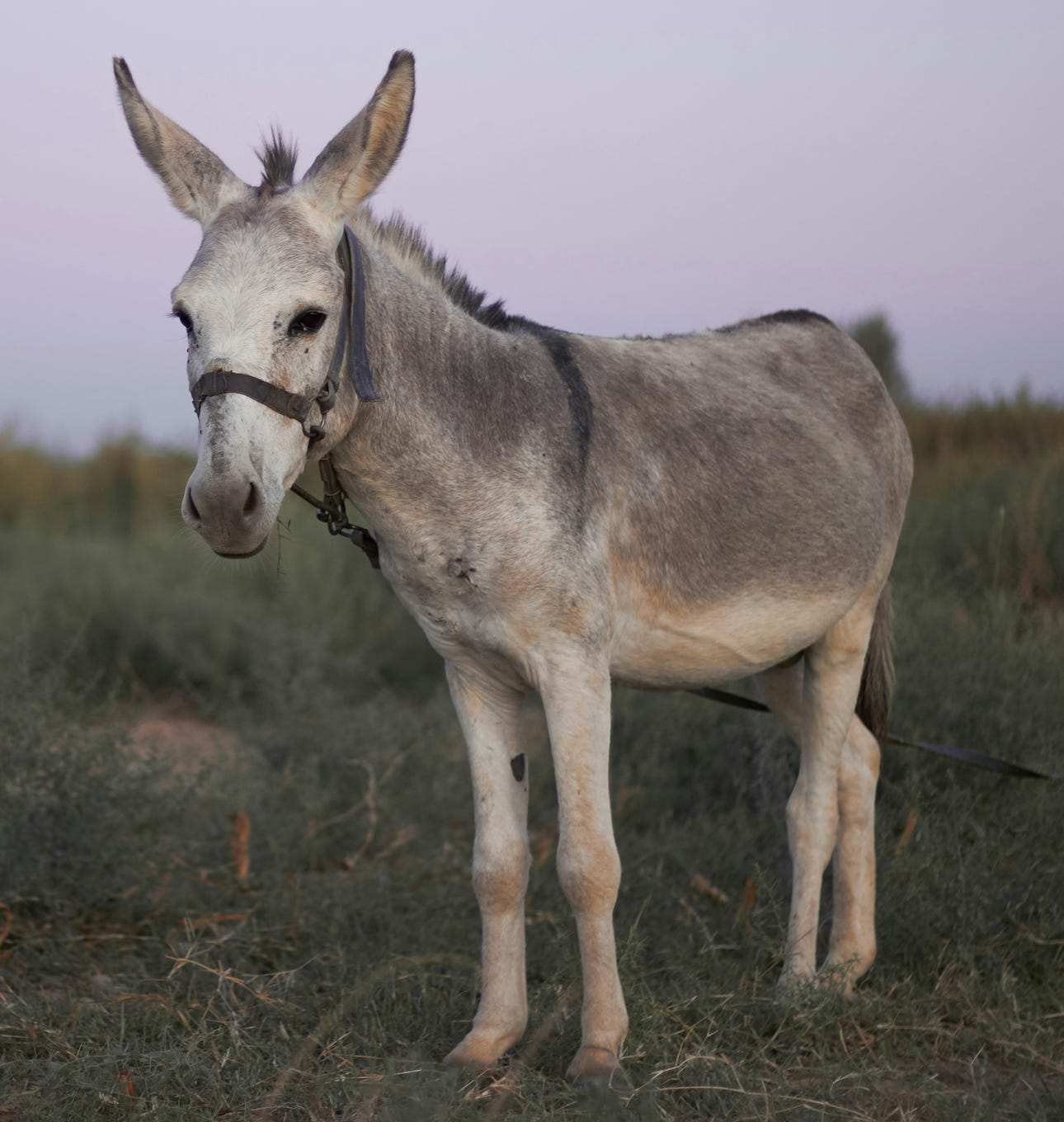
Grey Donkey photo by TS Sergey on Unsplash